

Building Your First Crypto Portfolio
Published 10 August 2026
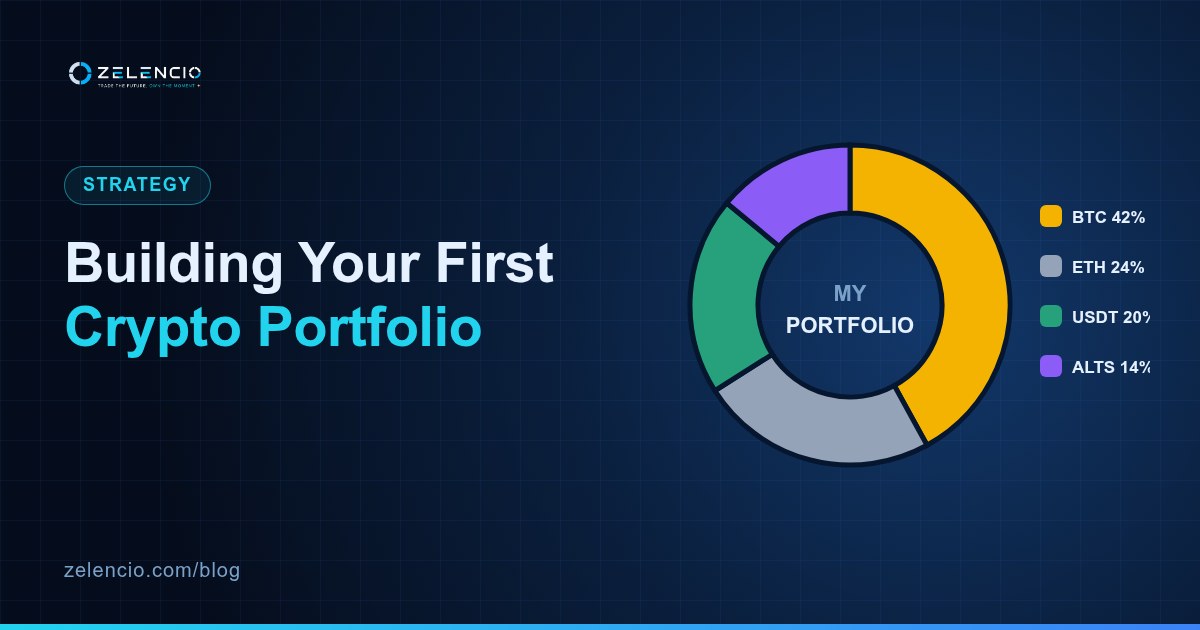
Owning one coin is a bet. Owning forty is a mess. Here is a sensible middle, and how to think about proportions.
Decide the total first
Before choosing anything, decide what portion of your savings goes into crypto at all. For most people that is a small single-digit percentage. It should be money that can be untouched for years and, worst case, lost entirely.
An emergency fund in ordinary money comes first. Always.
A structure that holds up
The core — the majority. Bitcoin and Ethereum. The largest, most tested, most liquid. Unexciting, and that is the point.
The middle — a modest slice. Established projects with real usage that you can explain to someone else without using the word "revolutionary".
The edge — small, and treated as gone. Newer and speculative. Size this so that losing all of it changes nothing about your life. Most of it will not work out.
Stablecoins — some. Dry powder for opportunities, and something that does not fall when everything else does.
Rules worth keeping
If you cannot explain what it does, do not own it. Not the price story — what the thing actually does. This one rule filters out most bad decisions.
Position size beats prediction. Being wrong about 2% of your portfolio is a lesson. Being wrong about 60% is a disaster.
Rebalance occasionally. If the edge grows to a third of your portfolio through gains, trim it back. This forces selling high and buying low mechanically.
Write down why you bought it. One sentence, dated. When the price falls, you can check whether your reason is still true, or whether you are just hoping.
Mistakes that are almost universal
- Buying because it went up, then selling because it went down.
- Owning twenty things you cannot describe.
- Confusing a low price with being cheap. Price without supply means nothing.
- Following anonymous advice from people with a position to sell.