

Market Cap Matters More Than Price
Published 11 August 2026
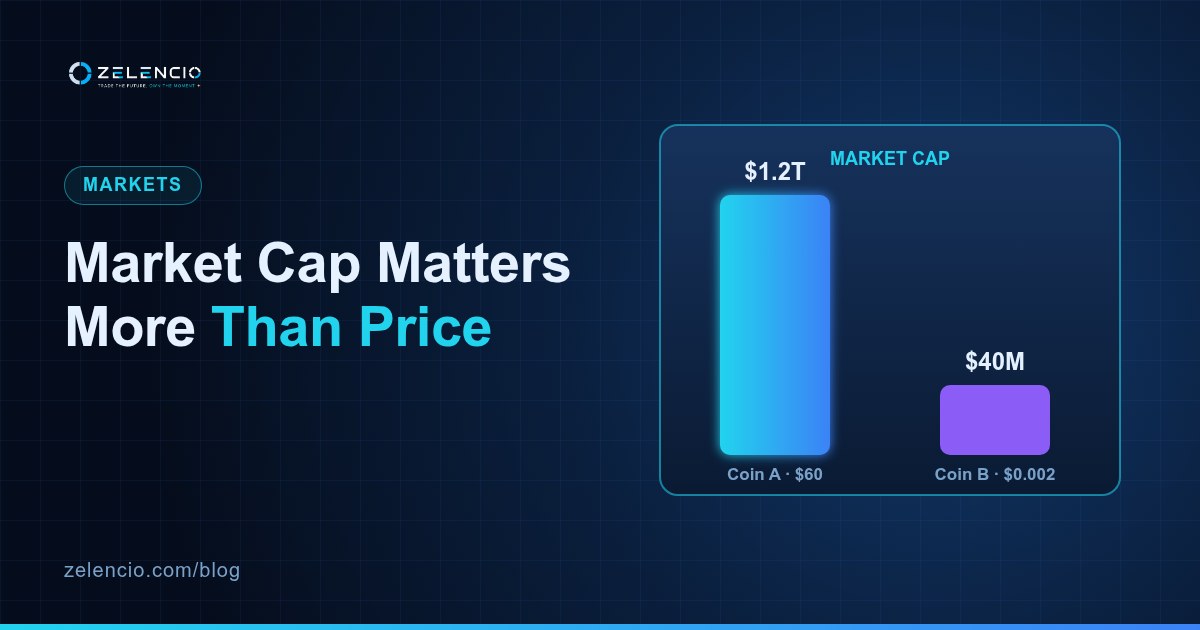
"This coin is only $0.003, imagine if it hits $1!" is the most common and most expensive misunderstanding in crypto. Here is why price alone tells you nothing.
Price without supply is meaningless
A coin's price depends entirely on how many exist. A project worth $10 million could price at $10 with one million coins, or $0.001 with ten billion. Identical company, wildly different price tag.
The right measure is market cap: price × circulating supply. That is what the whole thing is valued at.
Running the numbers
A coin at $0.003 with 500 billion coins has a market cap of $1.5 billion. For it to reach $1, the market cap becomes $500 billion — larger than Ethereum has ever been.
That is not a small move. It is asking a project you have probably never heard of to become one of the largest assets on earth. Written that way, the appeal fades.
Fully diluted valuation
The other number to check. Market cap uses circulating supply. FDV uses total supply including coins not yet released.
A project with a $50 million market cap but $2 billion FDV means most coins are still locked, and they are coming. Those unlocks are guaranteed future selling pressure, on a public schedule.
Check the unlock calendar before buying anything with a large gap between the two numbers.
What market cap tiers imply
- Very large — established, more liquid, moves less violently.
- Mid — real potential, real risk, meaningful room to grow.
- Small — can multiply, can also go to zero, and often does.
- Micro — frequently thin enough that one seller can move the price 40%.
The habit
Before buying anything, look up market cap and FDV. Then ask: for this to double, what would it need to be worth, and does that number sound plausible?
That single question prevents most bad purchases.