

Crypto Wallets Explained: Custodial vs Non-Custodial
Published 22 July 2026
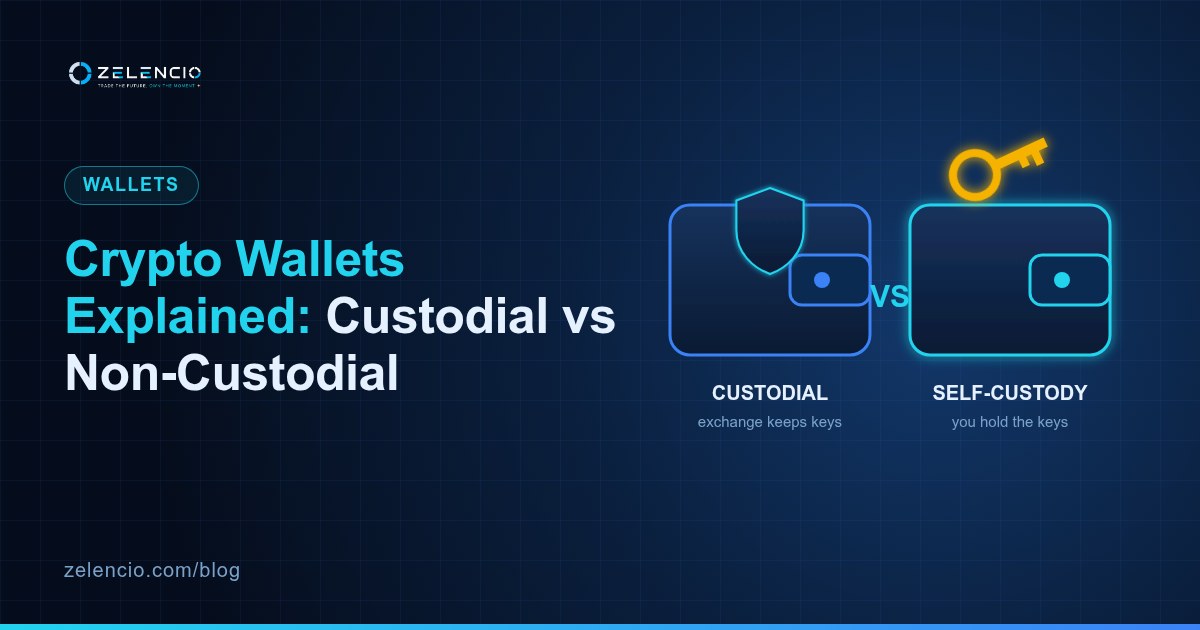
"Not your keys, not your coins" gets repeated constantly, usually without explaining what a key is. Here is what it actually means and how to decide what suits you.
A wallet does not hold coins
Your coins live on the blockchain. A wallet holds the key that proves they are yours and lets you move them. Lose the key and the coins still exist — you simply can no longer reach them.
That is why "I lost my wallet" is not like losing a physical wallet. Nobody found your money. It is sitting exactly where it was, permanently unreachable.
Custodial: someone else holds the key
When you keep crypto on an exchange, the exchange holds the key. You have an account with them, the way you have an account with a bank.
Good: forgot your password? Reset it. Phone stolen? Sign in elsewhere. Someone is responsible for keeping it safe, and that someone is not you at 2am.
Bad: you are trusting a company. If they are badly run, badly secured, or dishonest, your money is exposed to their problems. This has happened, more than once, at scale.
Non-custodial: you hold the key
You get a recovery phrase — usually twelve or twenty-four words. Those words are the money. Anyone with them has your coins. Nobody without them can help you, including the wallet's creators.
Good: nobody can freeze, seize or lose it on your behalf. It is genuinely yours.
Bad: genuinely yours also means genuinely your problem. No password reset. No support. House burns down with the only copy of the phrase in it, and that is the end of the story.
How to actually decide
Ask one question: if I lost access tomorrow, how bad would it be?
Small amounts you are actively trading — custodial is sensible. The convenience is worth more than the theoretical risk.
Money you would be devastated to lose — non-custodial, with the recovery phrase written on paper and stored somewhere fireproof and private.
Most people sensibly use both. Trading balance on the exchange, savings in their own wallet.
Things that will cost you money
- Screenshotting your recovery phrase. Photos sync to the cloud. Cloud accounts get breached.
- Typing it into any website. No legitimate service ever asks for it. None. This is the single most successful scam in crypto.
- One copy only. Paper burns and floods. Two copies, two locations.
- Telling anyone you hold a lot. The oldest security advice there is, and still the most ignored.