

What Actually Moves Crypto Prices?
Published 6 August 2026
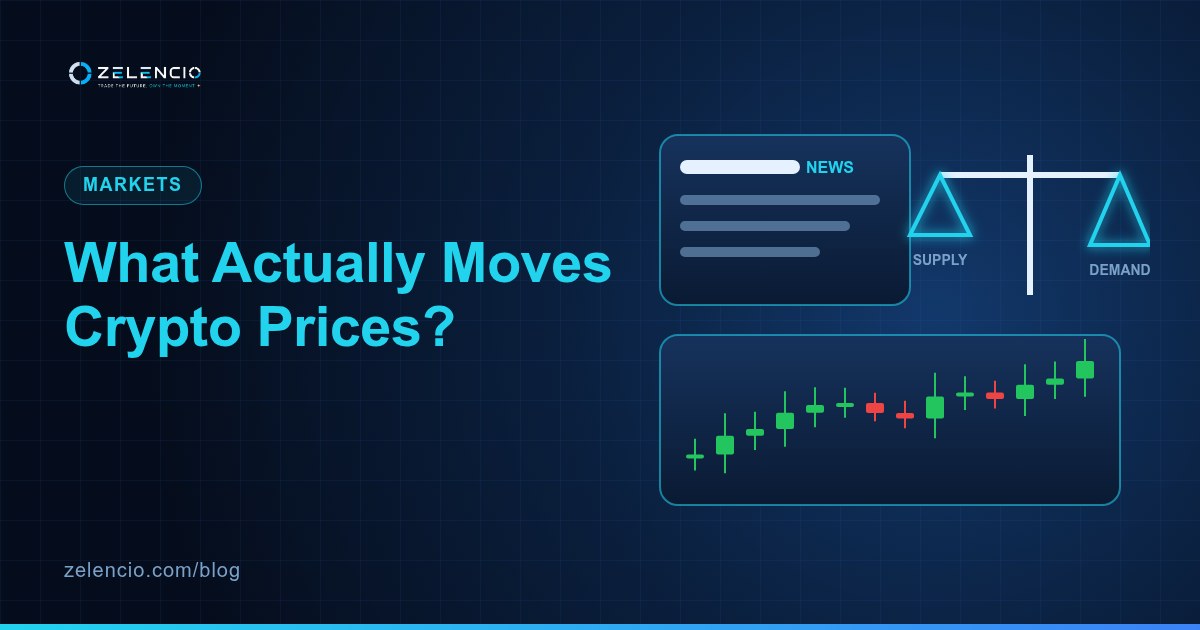
Crypto prices seem to move randomly. They do not — but the reasons are less satisfying than most explanations suggest.
Supply and demand, first and last
Every price is simply where buyers and sellers currently agree. Everything below is just a reason someone changed their mind.
Money conditions
The largest driver, and the least discussed. When borrowing is cheap and money is plentiful, capital flows into risky assets and crypto rises. When rates rise, that money leaves.
This is why Bitcoin often moves with tech stocks despite having nothing to do with them. Both are the same trade: appetite for risk.
Regulation
An approval in a major market brings institutional money. A ban or restriction removes it. These produce the sharpest single-day moves because they change who is legally able to participate.
Supply events
Bitcoin's halving cuts new supply every four years. Some networks burn coins, reducing supply over time. Others unlock large tranches to early investors on a schedule — worth checking before buying, because that is guaranteed future selling.
Leverage and liquidations
This explains most violent short-term moves. When heavily leveraged positions get liquidated, they are force-sold. That pushes the price further, liquidating more positions, in a cascade.
A 15% drop in twenty minutes on no news is usually this. Nothing changed except that too many people had borrowed too much.
Narrative
Crypto runs on stories more than most markets. A theme catches on and money flows to anything associated with it. Narratives are real drivers, and they rotate. Arriving late to one is how people buy tops.
What matters least
Daily news. Most of what fills crypto media is noise dressed as signal. Prices move, then explanations are written to fit. The explanation is usually invented afterwards.
If you are investing over years, almost none of the daily flow should change what you do.