
ERC20, TRC20, BEP20: Networks Explained
Published 2 August 2026
You go to withdraw USDT and are asked to pick a network. Choose wrong and the money is usually gone. This is the single most expensive piece of confusion in crypto, and it takes five minutes to understand.
The same asset on different roads
USDT is not one thing living in one place. The issuer has released versions on several blockchains. Each version is real USDT, worth a dollar, but it exists on its own separate network.
Think of two cities with the same street name. The address looks right. The city is wrong. Nothing arrives.
The main ones
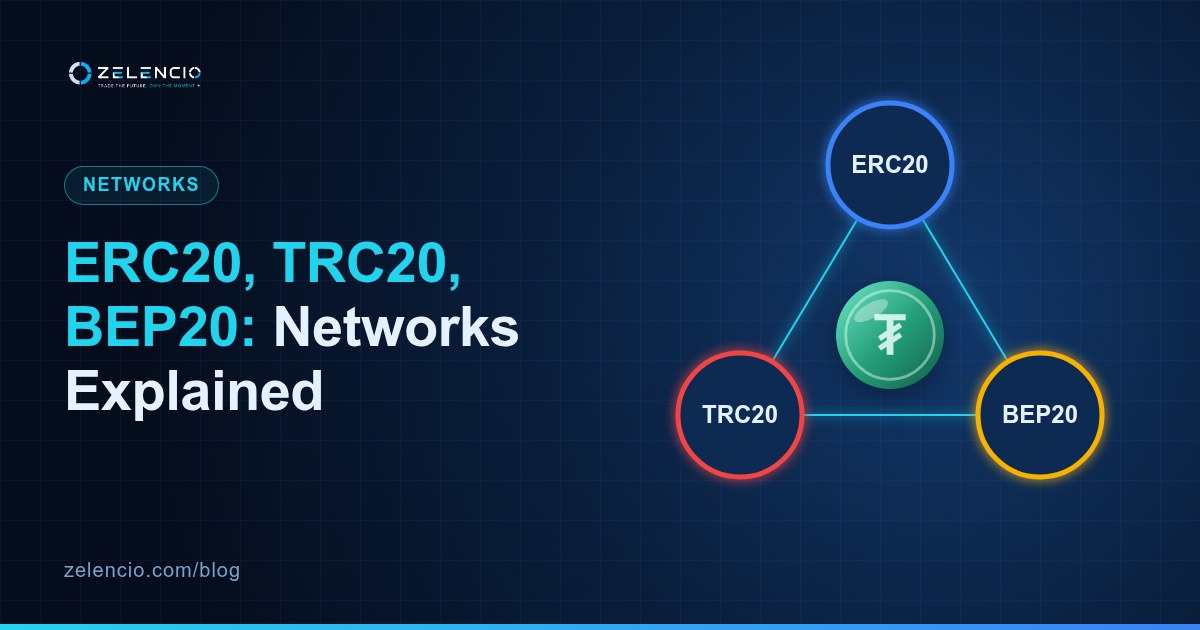
ERC20 (Ethereum). The most widely supported. Addresses start with 0x. Fees can be high when the network is busy. Reliable, accepted almost everywhere.
TRC20 (Tron). Very cheap, very fast. Addresses start with T. Extremely popular for moving USDT, especially larger amounts, precisely because the fee barely changes with size.
BEP20 (BNB Chain). Cheap and fast. Addresses also start with 0x, which is exactly why this one catches people out — an ERC20 address and a BEP20 address look identical.
The rule
The network you send on must match the network the receiver expects. Not the address format. The network.
Before withdrawing, check where it is going. If it is another exchange, open their deposit page and read the network they specify. Copy the address from there, and select the same network on your side.
Why 0x addresses are the dangerous case
ERC20 and BEP20 both use the 0x format. The address will be accepted. The transaction will succeed. The funds will land on a network the recipient may not be watching.
Sometimes recovery is possible if the receiving side controls that address on both chains, but it needs their technical help and is never guaranteed. Assume it is not recoverable.
A habit that costs nothing
Send a small test first. One or two dollars. Confirm it arrives. Then send the rest. Two extra minutes and a few cents against the alternative.