

P2P Trading: How to Trade Safely with Strangers
Published 25 July 2026
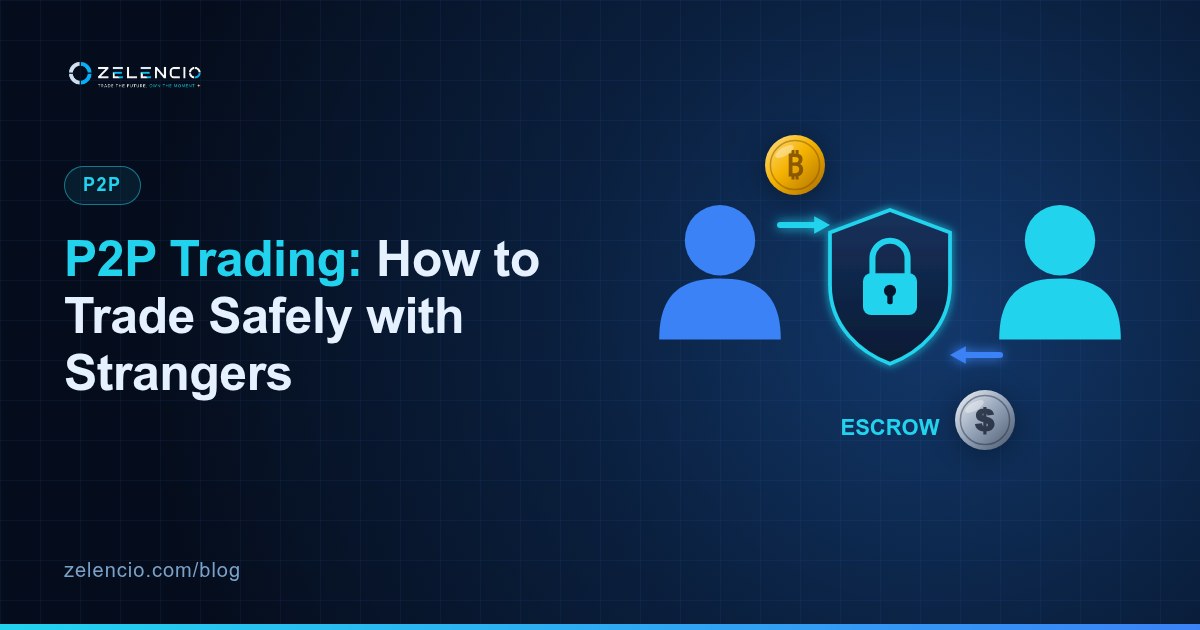
P2P trading means buying and selling crypto directly with another person, using your local bank or mobile money. In many countries it is the most practical route in and out of crypto. It is also where the most avoidable losses happen.
How escrow makes it work
You are not simply trusting a stranger. When a seller accepts an order, the platform takes their crypto and holds it. The seller cannot touch it. You pay them directly, mark the order paid, and once they confirm receipt the platform releases the crypto to you.
If the seller vanishes after you have paid, you raise a dispute and support reviews the evidence. The crypto is still in escrow the whole time, which is why the system works at all.
The rules that keep you safe
Never release outside escrow. Any trader suggesting you deal directly, on WhatsApp or Telegram, "to save fees", is setting up to steal from you. There is no legitimate reason. Report and move on.
Never release before the money has landed. Not "sent", not a screenshot — landed in your account and spendable. Screenshots are trivially faked and transfers get reversed.
Pay from an account in your own name. Third-party payments are the classic setup for a stolen-funds dispute where you lose both the crypto and the money.
Keep everything in the platform chat. If it is not in the chat, support cannot see it in a dispute.
Never write "crypto", "USDT" or "Bitcoin" in a bank transfer reference. Some banks flag and freeze these. Use the reference the order gives you, nothing else.
Choosing who to trade with
Look at completion rate, number of completed trades, average release time, and how long the account has existed. A trader with 500 trades at 99% has far more to lose from cheating you than someone with three.
A rate noticeably better than everyone else's is not a bargain. It is bait.
If something goes wrong
Raise the dispute inside the platform, immediately. Do not wait, do not keep negotiating privately. Attach your bank statement showing the transfer — the actual statement, not a screenshot of a notification. Then let support work. The crypto cannot go anywhere while the dispute is open.